
The Story Behind Indian Spices
From whole spices carefully selected by hand to the flavours that become part of our everyday meals — discover the story behind the ingredients that make Indian cooking unforgettable.
Indian cuisine is more than food. It is a story of aroma, colour, tradition and flavour — and spices are at the heart of that story.
Where the story begins
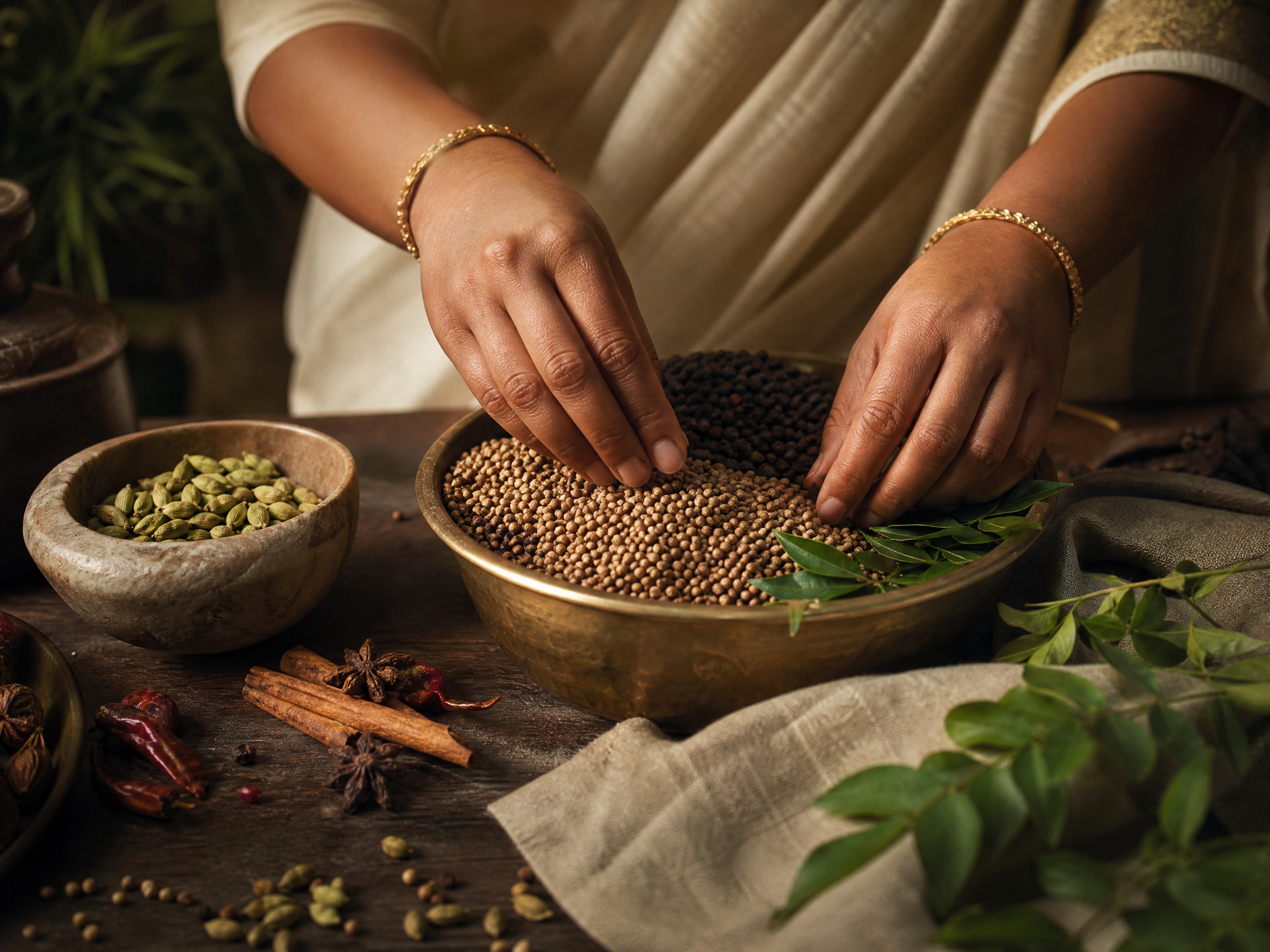
Long before a spice reaches a kitchen shelf, it begins its journey as a whole ingredient — a seed, fruit, bark, bud or root. Indian cooking has traditionally relied on these ingredients to build layers of aroma and flavour.
From the warmth of black pepper to the earthy character of coriander seeds and the golden colour of turmeric, every spice contributes something different to a dish.
“The secret of memorable Indian food often begins with the quality and character of the spices.”
Whole spices. Real character.
Whole spices are valued for their distinctive aroma and versatility. They can be roasted, tempered, ground or added directly to a recipe depending on the dish.
This is why ingredients such as jeera seeds, coriander seeds and black pepper continue to hold an important place in everyday Indian kitchens.
Black Pepper
Known for its warm, sharp character, black pepper adds depth to savoury dishes and can be used whole or ground.
Coriander
Coriander brings a distinctive earthy and citrus-like character to curries, masalas and everyday cooking.
Jeera
Jeera is a familiar part of Indian cooking, especially when tempered in oil or used to create aromatic spice blends.
From tradition to the modern kitchen
Modern lifestyles may have changed the way we shop and cook, but the importance of good spices remains the same.
Today, convenient spice powders and carefully packed whole spices make it easier to bring familiar Indian flavours into everyday meals — whether you are preparing a simple dal, fragrant jeera rice or a rich curry.
What matters is choosing spices that fit naturally into your cooking routine and storing them properly so that their character can be enjoyed for longer.
How to keep your spices fresh
Once your spices reach your kitchen, proper storage becomes important. Keep spice packs tightly closed and store them in a cool, dry place away from direct sunlight and moisture.
Avoid keeping spices near strong sources of heat or steam, such as directly beside a cooking stove.
Bring the flavour home.
Explore ZOLIF spices and discover ingredients made for everyday Indian cooking.
Explore ZOLIF Spices →